
The Invisible Risk of Unrenewed Premium Plugins
By Gianfranco Navas
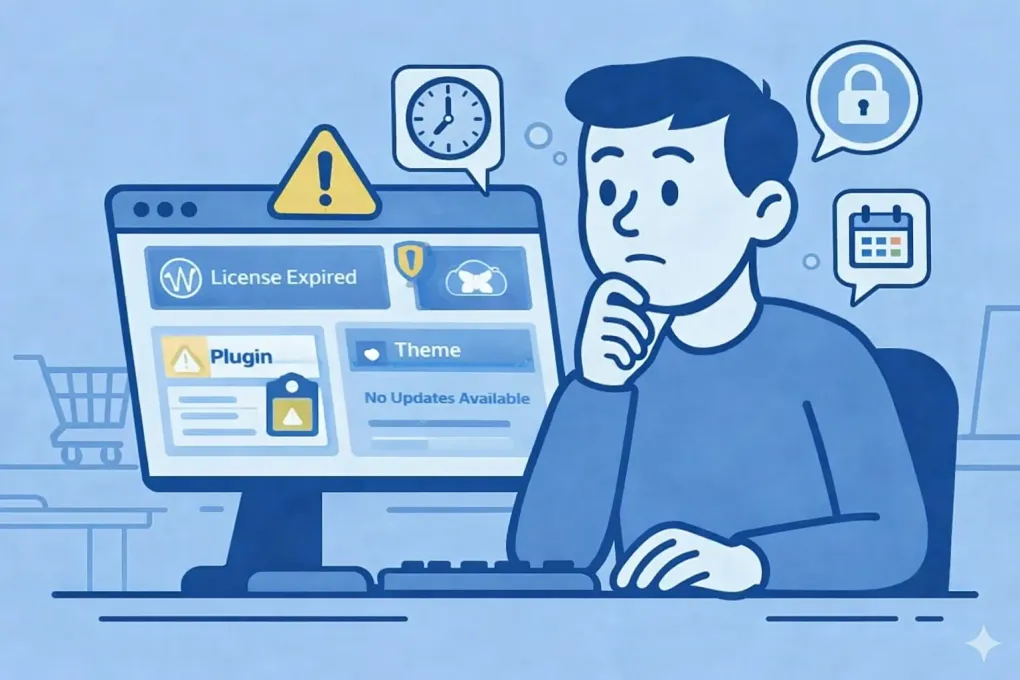
Many websites seem fine. They load fast, show no visible errors, and keep working like the first day. From the outside, there is nothing that suggests something is wrong. Yet inside, many of those sites are accumulating a serious, silent problem: premium plugins and themes with expired licenses.
A problem almost no one explains
What is most concerning is not that licenses have expired, but that in most cases the client doesn’t know it. The site was sold as a complete project, delivered working, with premium tools included, and the topic was never brought up again. The first year everything runs smoothly. Then renewals arrive, no one pays because no one explained them, and the software is frozen in time.
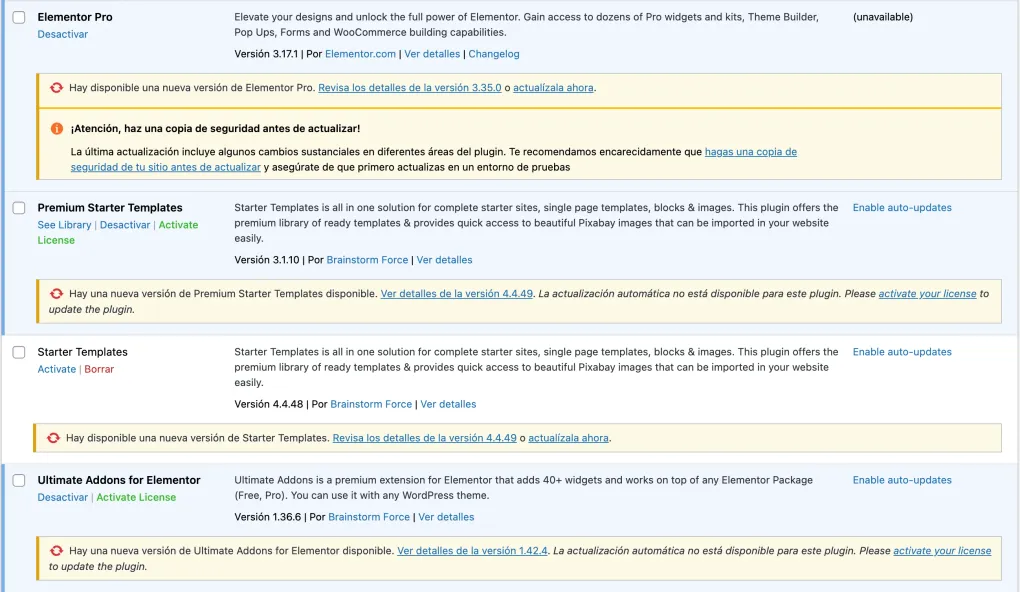
When everything seems to work, but it’s no longer secure
The site doesn’t go down when a license expires. It doesn’t stop loading or show obvious errors. And that is precisely the trap. WordPress keeps updating, the server keeps running, but critical plugins stop receiving security patches. Every new vulnerability that appears remains open, waiting to be exploited.
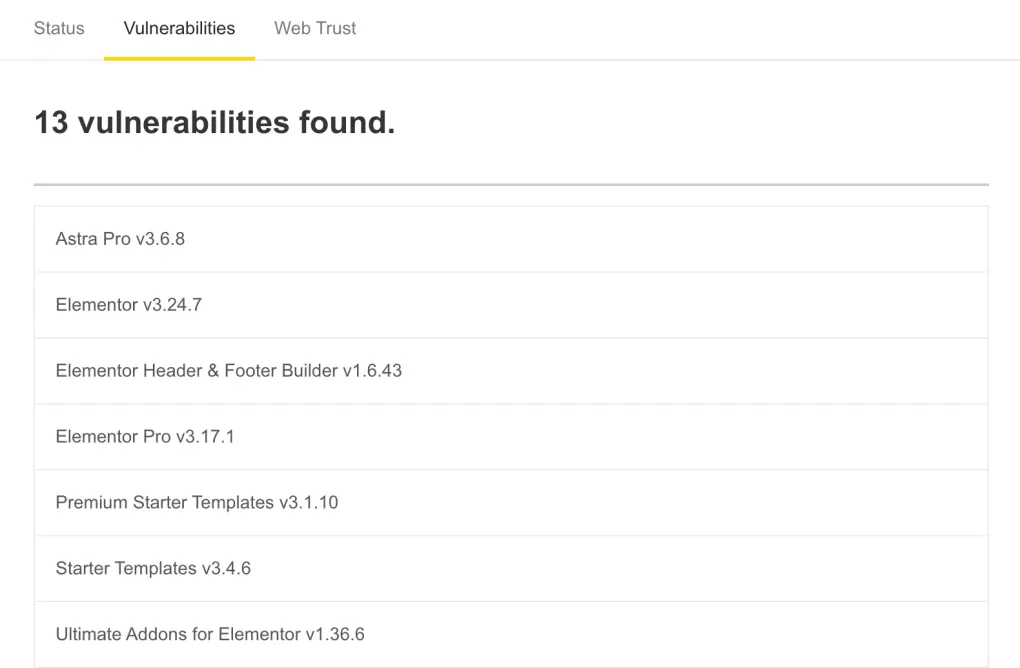
This is not a hypothesis or an isolated case. The vast majority of attacks on WordPress sites do not target the core system, but outdated plugins and themes. Software that is still active but no longer evolves. A site can look healthy and still be exposed.
The risk multiplies in online stores
The problem becomes much more serious when we talk about online stores. In ecommerce, it’s not only the site at stake, but customer data, orders, the business’s reputation, and the trust built over time. A single vulnerable plugin can open the door to data theft, malware injection, redirects to fraudulent sites, or even search-engine penalties. This is not alarmism; it is one of the most common causes of security incidents today.
Premium licenses are not the problem
It’s worth clarifying: using premium plugins is not the mistake. In fact, for many projects they are the best or only viable option. The problem appears when those tools are not renewed, when no one monitors them, and when the site owner believes everything is resolved forever. A premium license is not only access to support. It is access to updates, compatibility with new WordPress versions, and critical security fixes.
Signs that are often overlooked
There are clear signs that are often overlooked. Ignored expired-license notices, plugins that haven’t been updated for months, no one who knows exactly which tools are premium and which are not, a complete absence of a maintenance contract, or developers who are no longer available. All of that indicates a latent risk, even if the site “works.”
A website is living software
The solution is not complex, but it does require a professional perspective. A website is not a file that gets delivered and forgotten. It is living software. It needs maintenance, periodic reviews, updates, and clarity from the start about what the project includes and what renews over time. Security and stability should not be optional or improvised.
The greatest risk is not paying for a premium license. The real risk is not knowing that it is no longer active. And when that happens, the problem is usually detected only when it is already too late.
That’s why, in our maintenance and support plans, the cost of premium licenses is covered while the plan is active. You don’t have to keep track of renewals, dates, automated emails, or technical notices. We make sure everything stays updated, secure, and working as it should.
The idea is simple: that your site does not become a silent risk over time and that you can focus on your business, knowing the technical side is under control. Let’s talk.